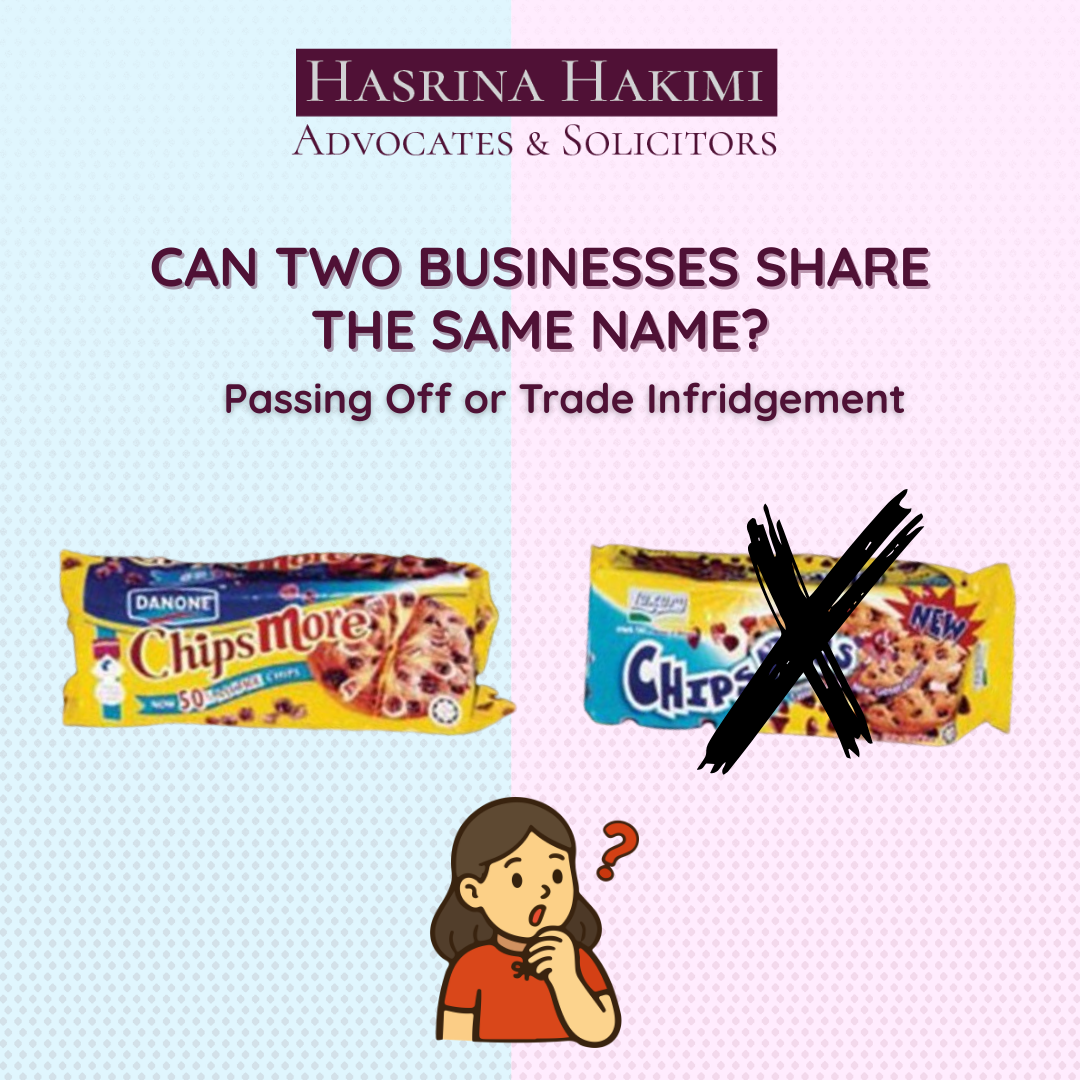

- The Central Question
When businesses have coexisted for an extended period with similar names and logos in a related industry, can a defendant successfully argue honest concurrent use to defeat claims of passing off or trademark infringement? The answer varies significantly between jurisdictions.
- The Malaysian Approach
The Federal Court examined this issue in a dispute between two biscuit manufacturers, Munchy Food Industries Sdn Bhd and Huasin Food Industries Sdn Bhd. Munchy had registered and used the “LEXUS” mark on their biscuit packaging since 1998, while Huasin sought to register “LEX” in 2015.
Under Malaysia’s Trade Marks Act 1976, Section 19 prevents registration of marks that are identical, deceptively similar, or resembling existing registered marks. However, Section 20 provides a statutory exception allowing registration despite conflicts where “honest concurrent use” or other special circumstances exist. The Court or Registrar may impose conditions, amendments, or limitations when permitting such registration. Critically, defendants must specifically plead this defence.
To add, in Dynawell Corporation (M) Sdn Bhd v Dynasty Landmark Sdn Bhd [2015] 1 LNS 1195, Azizah Nawawi J (as Her Ladyship then was) held that the plaintiff failed to prove honest concurrent use of the mark. The High Court emphasised that the burden of proof lies on the applicant to establish that its use of the mark was honest.
Relying on Lam Soon Marketing Services Ltd v Lam Mei Hing [1994] 3 HKC 414, the court explained that honesty cannot be presumed. The applicant must provide evidence explaining how and why the mark was adopted, including whether it had knowledge of the earlier similar mark. If no evidence is given regarding the circumstances of adoption, the court cannot simply assume honest use. The test is decided on the balance of probabilities, and without clear proof, a claim of honest concurrent use will fail.
- The UK Position: ‘China Tang’ Case
The UK takes a notably different approach, as illustrated in Gnat and Company Ltd v West Lake East Ltd [2022]. This case involved two restaurants sharing the “China Tang” name—one an upscale establishment in London’s Dorchester Hotel, the other a modest takeaway in northern England.
The claimants pursued two causes of action: registered trademark infringement under the UK Trade Marks Act 1994 and the common law tort of passing off. The defendants argued that geographical and stylistic differences eliminated confusion risk, that the mark lacked UK reputation when they began trading, and honest concurrent use.
- The Court’s Findings
The Intellectual Property Enterprise Court (IPEC) reached different conclusions on each claim:
a. Trademark Infringement Allowed: Under Section 10(2) of the Trade Marks Act 1994, the Court found the marks visually and aurally identical. Since the claimant’s registration covered “restaurant services” generally, confusion was likely despite the businesses’ dramatically different character and locations.
b. Passing Off Dismissed: The IPEC found insufficient evidence of reputation or goodwill in the UK, and no demonstrated deception regarding a business connection in the public’s mind, even after twelve years of simultaneous trading.
c. Honest Concurrent Use Rejected: The defendants failed this defence because they had conducted no basic internet search before adopting the name. The Court emphasised that in today’s digital environment, minimal research would have revealed the London restaurant. Ignorance of another party’s trademark, absent reasonable due diligence, cannot establish the honesty required for this defence.
- Essential Principles
Two critical lessons emerge from these cases:
a. A claimant need only demonstrate a likelihood of confusion, not actual confusion or deliberate copying.
b. Businesses selecting trading names bear the responsibility to conduct proper due diligence. Reasonable searches and professional advice are expected standards, and failure to undertake them undermines any claim to honest and concurrent use.