
Pupillage is an important stage in the journey of becoming an advocate and solicitor. During the nine months of chambering, pupils gain practical exposure under the guidance of their Master (also known as the Pupil Master). However, there may be situations where a pupil decides that changing their Master’s or law firm is necessary for professional or personal reasons.
Although changing Masters during pupillage is possible, it must be done carefully and in accordance with the rules set by the Malaysian Bar under the Legal Profession Act 1976.
Below is a simple guide to help pupils understand the process.
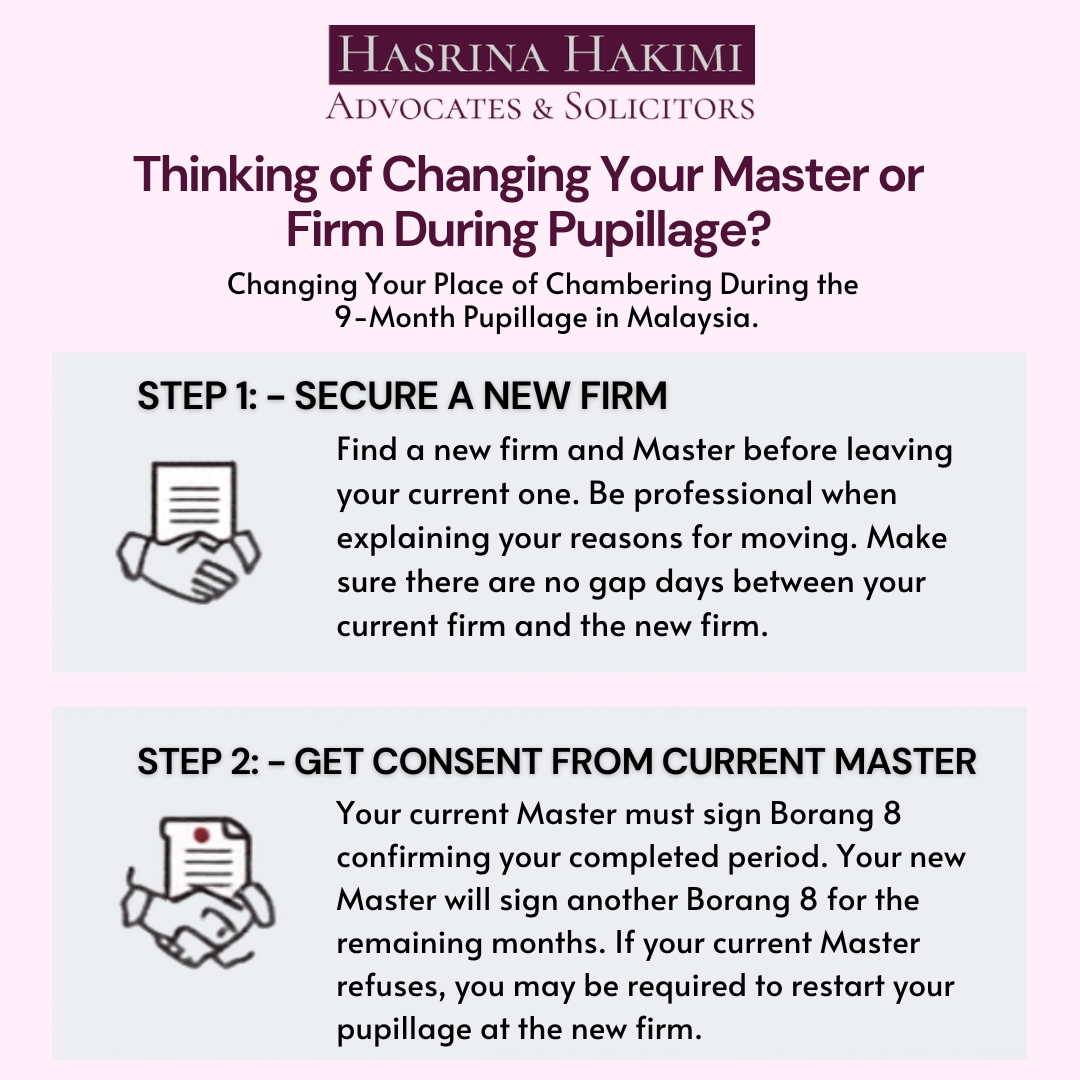
1. Find and Secure a New Master First
Before initiating any formal process, the most important step is to secure a new law firm and a Master who is willing to accept you as their pupil. When applying to a new firm, it may be helpful to attend the interview first before explaining your current situation. If the interview goes well and the firm shows interest, you can then explain that you are currently undergoing pupillage elsewhere and intend to change Masters.
Most Masters will ask why you wish to move. It is always advisable to explain your reasons professionally without speaking negatively about your previous firm. Maintaining professionalism reflects well on you and helps avoid unnecessary tension between practitioners.
Another important point is to avoid any gap between the old firm and the new firm. For example, if your pupillage ends at your current firm on 4 January, you should start with the new firm on 5 January. A continuous pupillage period is important for the approval process, as it is a requirement from the Malaysian Bar that there is no gap in between.
2. Obtain Consent from Your Current Master
Your current Master plays a crucial role in this process.
If your Master agrees to the change, they must sign Borang 8, confirming the period you have already completed under their supervision. Your new Master will also sign another Borang 8 for the remaining period of your pupillage. Both Borang 8 forms must then be duly filed.
When both Masters cooperate, you may continue the remaining months of your pupillage without restarting. However, if the current Master refuses to sign the form, the pupil may have no choice but to restart the entire nine-month pupillage with the new Master. Therefore, it is important to communicate respectfully and settle matters properly with your current firm.
3. File the Notice of Change of Master
Once everything has been agreed and you have started at the new firm, the next step is the formal documentation.
You must:
- File a Notice of Change of Master in court through the EFS system under “Surat (Daripada Peguam)”.
- Serve the notice to:
- The Malaysian Bar
- The Attorney General’s Chambers
- The State Bar Committee where your pupillage is being conducted
If your new Master is practising in a different state, the notice must also be served on the Bar Committee of that state, together with Borang 1 and Borang 2.
After the notice is filed, the relevant bodies may contact your previous Master to confirm several matters, including:
- whether they agree to the change
- whether there was any gap between firms
- whether the pupil had taken any leave during the pupillage period
For this reason, your old Master must be informed and supportive of the process.
You can get the sample of Notice of Change of Master here: https://klbar.org.my/wp-content/uploads/2018/08/Notice-of-Change-of-Master.pdf
4. New “Short Call” Order (If Applicable)
If the new Master practises in another firm, they must apply for a new “short call” order under Section 36(2) of the Legal Profession Act 1976.
This order allows the pupil to appear in court on behalf of the new Master or the firm.
If you have already obtained a short call, you will need to make a new application to represent your new Master or firm in court. This is because your original short call order is pegged to your previous Master, not to you personally.
To address this, you must file a Summons in Chambers seeking the court’s permission to represent your new Master. The application must be supported by:
- an affidavit affirmed by you, and
- an affidavit affirmed by your new Master.
The process is similar to when you first applied for a short call by filing Borang 3, Borang 4, and Borang 5.
Once the court seals the Summons in Chambers, you must serve the sealed documents on:
- the Malaysian Bar
- your State Bar Committee
- the Attorney General’s Chambers
You will also need to obtain a Letter of No Objection from both the Bar Council and the State Bar. These letters must be submitted to the Registrar of the High Court before the hearing date stated in the sealed Summons in Chambers. Only after the court grants the order will you be able to represent your new Master in court.
Changing Masters during pupillage is not uncommon, but it must be handled with professionalism, transparency, and respect. The key points to remember are:
- Secure a new firm before leaving the current one
- Ensure there is no gap between the two firms
- Obtain your current Master’s consent and signature on Borang 8
- Properly file and serve the Notice of Change of Master
Most importantly, maintain good relationships with both your former and new Masters. Pupillage is not only about learning the law but also about building professional integrity and reputation within the legal community.
Disclaimer: The procedures outlined above are based on personal experience and may be subject to change from time to time. Please verify the latest steps, processes, and requirements with the Malaysian Bar.