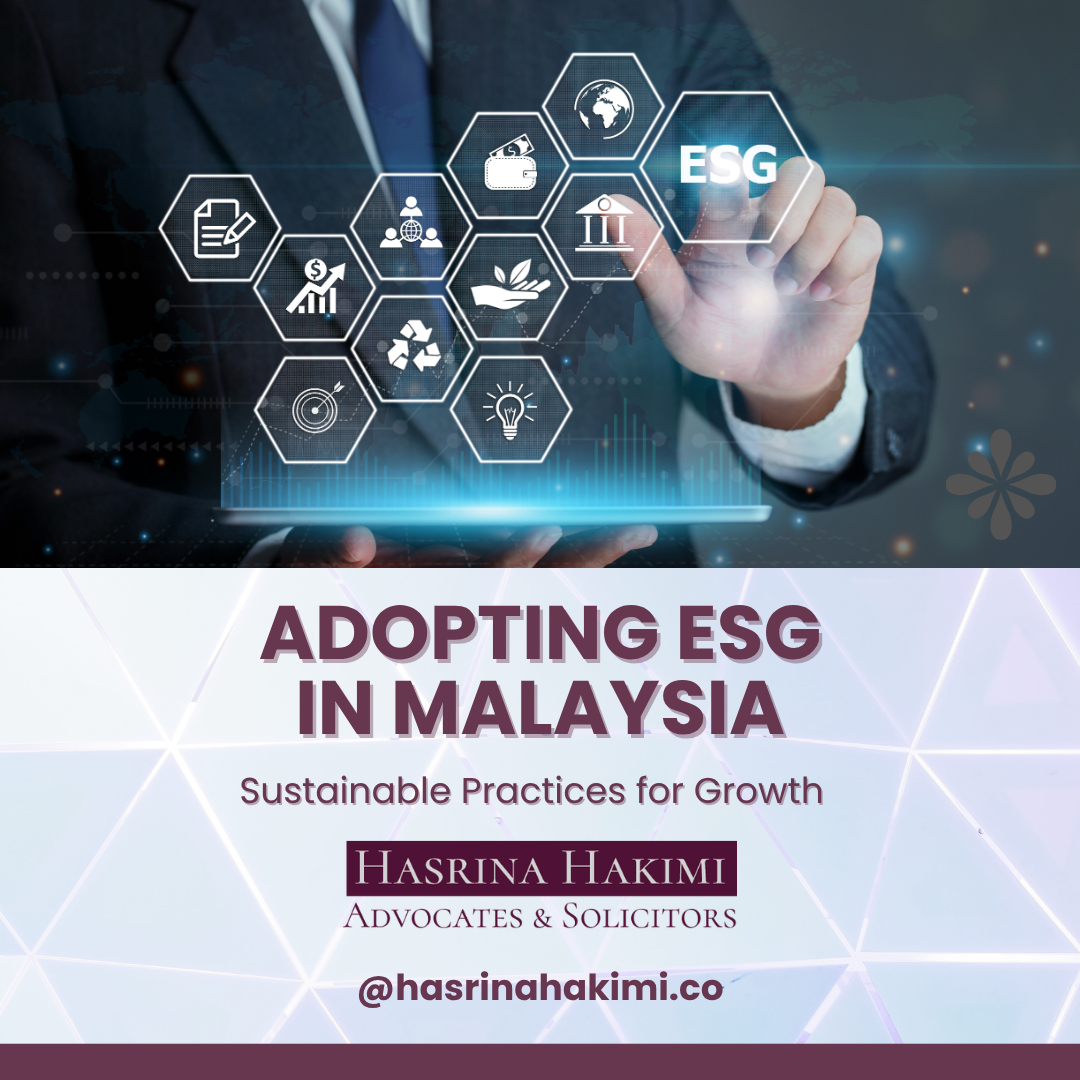
ADOPTING ESG IN MALAYSIA: SUSTAINABLE PRACTICES FOR GROWTH
Introduction
In Malaysia, there is escalating pressure for corporate enterprises to minimize their environmental footprint and implement operations that actively contribute towards a sustainable future. In recent years, the adoption of Environmental, Social, and Governance (ESG) principles has transitioned from a voluntary corporate social responsibility gesture into a vital prerequisite for businesses competing both domestically and across global supply chains.
This structural shift is redefining conventional commercial practices, aligning profitability with broader societal and environmental objectives. Concurrently, institutional investors and everyday consumers are increasingly prioritizing organizations that demonstrate tangible, audited commitments to ethical operations.
Regulators in Malaysia have adopted a proactive stance in fostering corporate ESG integration. The Securities Commission Malaysia (SC) has embedded sustainable governance within frameworks like the Malaysian Code on Corporate Governance (MCCG) while championing green financing mechanisms and tax incentives. Furthermore, Bursa Malaysia has instituted its comprehensive Sustainability Reporting Guide, compelling publicly listed corporations to transparently disclose their environmental risks, transition strategies, and governance safeguards.
The Advantages of ESG Integration for Malaysian Companies
a) Attracting Capital & Investment
As institutional funds, sovereign entities, and private equity firms increasingly mandate ESG compliance, companies demonstrating credible sustainability metrics are distinctly better positioned to access competitive capital from both domestic and foreign investors.
b) Building a Stronger, Resilient Brand
Modern consumers and corporate buyers are acutely conscious of environmental impact and corporate ethics. Demonstrating authentic commitment to ESG values builds robust brand equity, strengthens customer loyalty, and opens avenues to forward-thinking market segments.
c) Mitigating Regulatory & Operational Risks
Proactively managing carbon emissions, workplace safety, labor standards, and internal controls allows companies to preempt litigation, avoid statutory penalties under Malaysian law, and insulate themselves against rapid shifts in international green regulations (such as cross-border carbon border adjustment mechanisms).
d) Sustaining Long-Term Value & Growth
Embedding resource efficiency, circular waste management, and ethical governance creates structurally leaner, more resilient business models equipped to deliver durable growth over the long term.
Key Challenges for Malaysian Companies in Adopting ESG
a) Limited Knowledge and Resource Constraints
Small and Medium Enterprises (SMEs) and mid-tier companies frequently lack the specialized in-house expertise and personnel needed to effectively navigate complex sustainability frameworks. Ongoing capacity-building and targeted legal-corporate advisory are essential to bridge this knowledge divide.
b) Initial Financial and Transition Outlays
Upfront costs associated with green technology adoption, sustainability auditing, and compliance advisory can pose a hurdle for companies during early adoption. However, forward-looking businesses are viewing these outlays not as sunk expenses, but as strategic investments that drive innovation, operational efficiency, and market differentiation.
c) Data Gaps and Reporting Complexities
Accurately aggregating, measuring, and reporting verifiable Scope 1, 2, and 3 emissions data remains a substantial operational challenge. Many organizations struggle to establish disclosure frameworks that are fully transparent, reliable, and compliant with rigorous international reporting standards (such as ISSB and GRI).
Conclusion
As Malaysia advances its position as a dynamic regional hub for sustainable commerce, the integration of ESG principles will prove decisive in shaping the corporate landscape. Far from being a mere compliance checklist, adopting ESG represents a fundamental, transformative strategy that will define the viability, resilience, and success of Malaysian business in the years ahead.