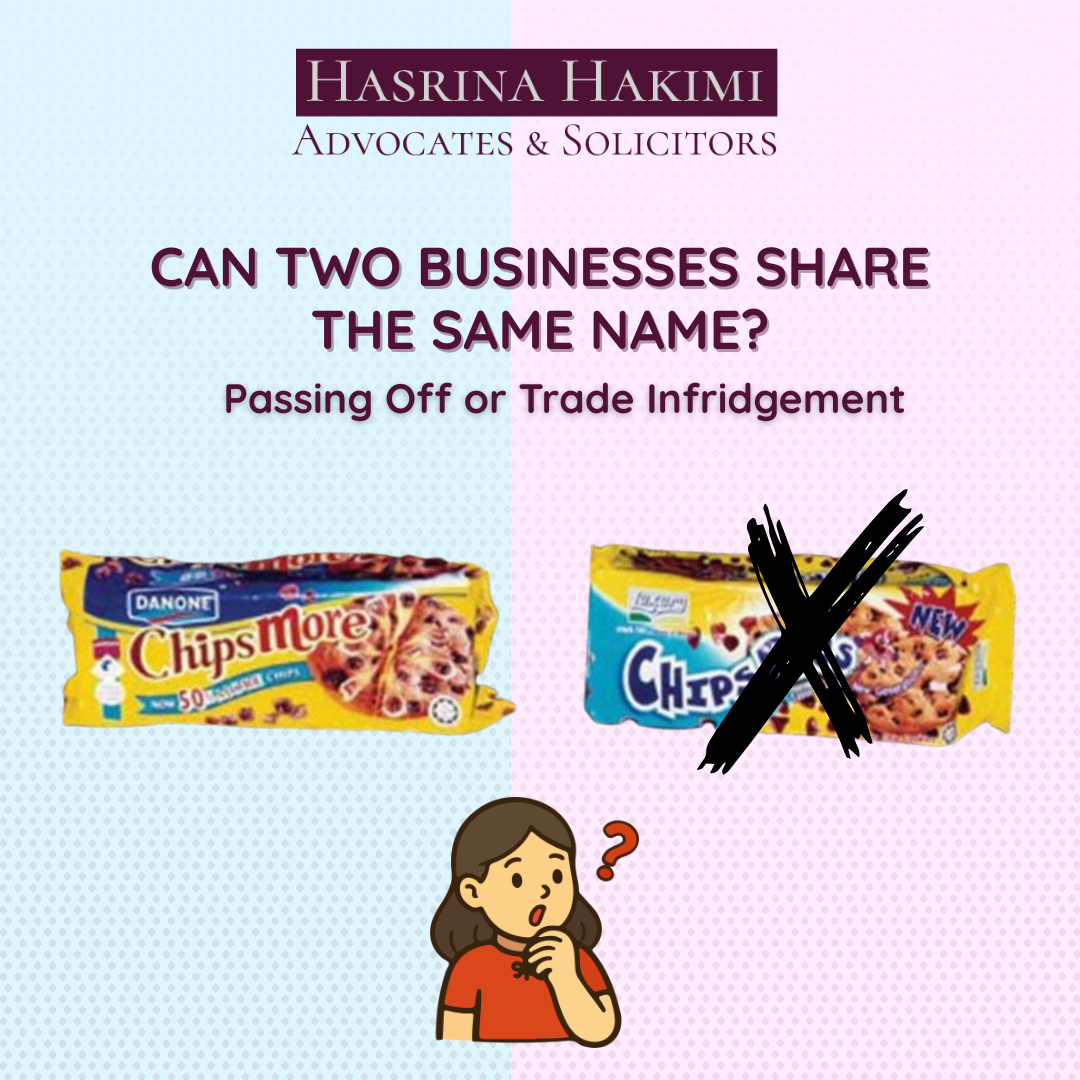
CAN TWO BUSINESSES SHARE THE SAME NAME? PASSING OFF OR TRADE INFRINGEMENT
1. The Central Question
When two independent businesses have coexisted for years with strikingly similar names, logos, or product get-ups in the same industry, can a defendant successfully invoke the defence of “Honest Concurrent Use” to escape liability for trademark infringement and the tort of passing off?
The answer depends heavily on judicial scrutiny, trademark registration status, and whether the junior user conducted genuine due diligence before adopting the mark.
2. The Malaysian Approach: Statutory Exceptions & The Burden of Honesty
Under Malaysian trademark legislation, the law strictly prohibits the registration of marks that are identical or deceptively similar to existing registered marks. However, the statute provides a narrow exception allowing concurrent registration where honest concurrent use or other special circumstances can be established.
The Biscuit War: Munchy Food Industries Sdn Bhd v. Huasin Food Industries Sdn Bhd
In this high-profile FMCG battle, Munchy had registered and used the famous “LEXUS” trademark for its cream-filled sandwich biscuits continuously since 1998. In 2015, competitor Huasin sought to register “LEX” for its own biscuits, seeking to rely on concurrent usage. The Federal Court affirmed that a defendant must specifically plead and strictly prove honest concurrent use on the evidence.
Honesty Cannot Be Presumed: Dynawell Corporation (M) Sdn Bhd v. Dynasty Landmark Sdn Bhd [2015] 1 LNS 1195
In Dynawell Corporation, Azizah Nawawi J (as Her Ladyship then was) firmly rejected a plaintiff’s claim of honest concurrent use.
Relying on Lam Soon Marketing Services Ltd v. Lam Mei Hing [1994] 3 HKC 414, the High Court established that:
- The Burden of Proof: Lies squarely on the party asserting honest concurrent use;
- Evidence of Inception Required: The applicant must adduce cogent evidence explaining how and why the mark was conceived, chosen, and adopted, including whether it had knowledge of the prior mark;
- No Presumption of Good Faith: If an applicant provides no credible history of its branding origin, the court will not presume honesty.
3. The UK Position: The Landmark ‘China Tang’ Case [2022]
A fascinating comparative analysis emerged from the English Intellectual Property Enterprise Court (IPEC) in Gnat and Company Ltd & Anor v. West Lake East Ltd & Anor [2022] EWHC 319 (IPEC).
The dispute involved two restaurants sharing the exact name “China Tang”:
- The Claimant operated an ultra-luxury fine dining establishment inside London’s prestigious Dorchester Hotel;
- The Defendant operated a modest Chinese takeaway shop located in Yorkshire, northern England.
The Claimant sued for both registered trademark infringement and common law passing off. The takeaway defended the action on grounds of huge geographical distance, contrasting clientele, and twelve (12) years of honest concurrent use.
The IPEC’s Landmark Ruling:
- Trademark Infringement UPHELD: Because the London restaurant’s trademark covered “restaurant services” nationwide, consumer confusion was legally presumed despite the vast difference in ambience, menu pricing, and geography.
- Passing Off DISMISSED: The luxury restaurant failed to prove local goodwill or customer deception in Yorkshire after 12 years of peaceful coexistence.
- Honest Concurrent Use REJECTED: The court dealt a crushing blow to the takeaway’s defence: the owner had failed to perform a simple internet search before naming the business. In the digital age, wilful blindness and failure to conduct basic due diligence completely destroys the element of “honesty”!
Essential Principles for Brand Owners & Startups
- Likelihood of Confusion is Sufficient: To succeed in trademark infringement, a claimant only needs to demonstrate a likelihood of public confusion; there is no requirement to prove actual fraudulent intent or bad faith.
- Pre-Adoption Due Diligence is Non-Negotiable: Any business launching a brand name, product line, or get-up bears an active legal responsibility to conduct comprehensive trademark registry and web searches. Claiming ignorance in the modern internet era will instantly defeat any defence of honest concurrent use.
Conclusion
Whether you are defending an established brand against copycat “lookalikes” or selecting a brand identity for a new commercial venture, proactive intellectual property clearance is indispensable. Coexistence is rarely accidental in the eyes of the law—without documented proof of good faith inception and rigorous pre-launch searches, relying on honest concurrent use is a high-risk gamble.
Disclaimer: This article is for informational purposes only and does not constitute formal legal advice. For assistance with trademark availability searches, IP infringement disputes, or passing off litigation, please contact Hasrina Hakimi Advocates & Solicitors.